Akuilah Display Font: Bold, Hand-Drawn Charm for Your Handmade Goods
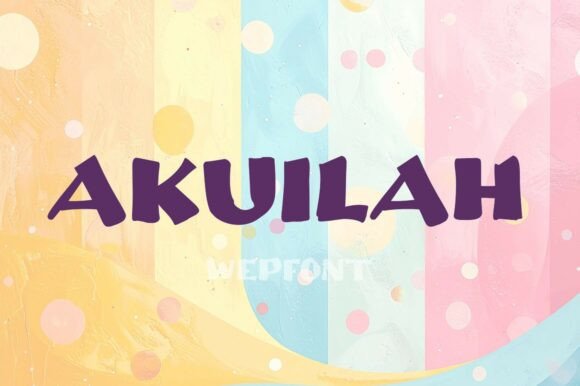
As a maker who prints labels on kraft paper, cuts vinyl stickers for local boutiques, and designs wedding welcome boards that hang at barn venues every weekend, I know how much a font can shape first impressions. Akuilah isn’t just another display font—it’s the kind of typeface that makes customers pause, smile, and reach for their phone to snap a photo. Its bold, hand-drawn aesthetic feels alive: slightly irregular strokes, confident curves, and an unmistakable sense of warmth. It doesn’t try to be perfect—and that’s exactly why it works so well for handmade products.
I’ve used Akuilah across dozens of real projects—candle jars with minimalist black ink on ivory labels, die-cut sticker sheets for small-batch soap makers, and printable planner pages sold as digital downloads. What stands out is how readable it stays even at smaller sizes. On 1-inch product tags? Clear. On 3/4-inch vinyl decals for mason jar lids? Still legible. That balance between personality and practicality is rare in modern display fonts. Unlike some expressive typefaces that blur or lose character when scaled down, Akuilah holds its own thanks to generous spacing, open counters, and thoughtful stroke contrast.
For physical goods, readability directly impacts perceived quality. A customer holding your lavender-scented soy candle shouldn’t squint to read “Calming Night Blend” on the front label. With Akuilah, short phrases shine—especially names, flavor notes, collection titles, and seasonal slogans like “Summer Harvest” or “Cozy & Cinnamon.” I use it most often for headlines, product names, and decorative accents—not body text—and that’s where it truly sings. Think “Hand-Poured” stamped beside a wax seal on a greeting card, or “Est. 2022” arched over a rustic wooden sign. It adds intention without overwhelming.
Because Akuilah leans into its hand-drawn roots, it pairs beautifully with clean supporting fonts. For packaging labels, I’ll set the product name in Akuilah and the ingredients list in a soft sans serif like Montserrat or Poppins—crisp, neutral, and highly legible at small point sizes. For wedding stationery, I pair Akuilah with a delicate script (like Quicksand or Pacifico) for names and a sturdy serif (such as Playfair Display) for details like time and location. The contrast gives hierarchy, rhythm, and visual breathing room—critical when printing on textured paper or cutting intricate SVG files for Cricut and Silhouette machines.
Speaking of machines: Akuilah cuts cleanly. I tested it across three different vinyl types and two laser printers, and it held detail well—even at 0.25 inches tall. No jagged edges, no collapsed terminals. That’s essential if you’re producing consistent batches of boutique tags or printable wall art meant for home framing. When previewing mockups for Etsy listings, Akuilah also translates well on screen—its energy reads clearly in thumbnails and mobile previews, helping your listings stand out in crowded search results.
Seasonal craft projects benefit especially from Akuilah’s joyful tone. I used it last fall for a line of “Pumpkin Spice & Everything Nice” tote bags—screen-printed in burnt orange ink—and got multiple comments about how “friendly” the typography felt. For holiday product packaging, it softens sharp corners and adds approachability to otherwise minimal designs. And because it’s designed with subtle variation in stroke weight—not mechanical uniformity—it avoids looking sterile or digital, which matters when your brand centers around authenticity and care.
Practical note: Akuilah comes with standard OpenType features including stylistic alternates and basic ligatures—small but meaningful touches that let you fine-tune rhythm and flow. If you’re designing digital templates (like Canva-ready invitation suites or editable PDF planners), those alternates help avoid repetition in repeated words like “&” or “the.” It supports Latin-based languages and includes uppercase, lowercase, numerals, and common punctuation—enough for most small business needs without bloating your file size.
Commercial licensing is straightforward—and critical to get right. Akuilah is licensed for unlimited physical product use: printed labels, embroidered patches, heat-transfer vinyl on shirts, ceramic mug decals, and even resin-coated wood signs sold at craft fairs. You can embed it in digital templates, SVG cut files, and printable downloads—as long as end users aren’t granted the font file itself. That means your Etsy listing for “Editable Wedding Invitation Bundle” is fully covered, but you wouldn’t include the .OTF in a ZIP folder labeled “Fonts Included.” Always double-check the license terms before launching merchandise, but with Akuilah, the permissions align closely with how makers actually work.
Where Akuilah truly elevates your shop isn’t just in aesthetics—it’s in consistency. Using the same display font across your product labels, Instagram story highlights, and printed thank-you cards builds quiet recognition. Customers begin to associate that bold, friendly energy with your brand. It’s not flashy branding; it’s steady, sincere, and human. That’s what handmade buyers respond to.
Whether you're pressing foil-stamped invitations for a June wedding, designing printable wall art for nurseries, or labeling small-batch hot sauce bottles with cheeky names like “Mildly Rebellious,” Akuilah delivers presence without pretense. It’s a premium font built for real production—not just inspiration boards. And in a market where attention spans are short and shelf space is limited, having a display font that’s both distinctive and dependable? That’s not just design polish. It’s your silent sales partner.